On the Ground: 2026
31 January
Author: Langdale Chase
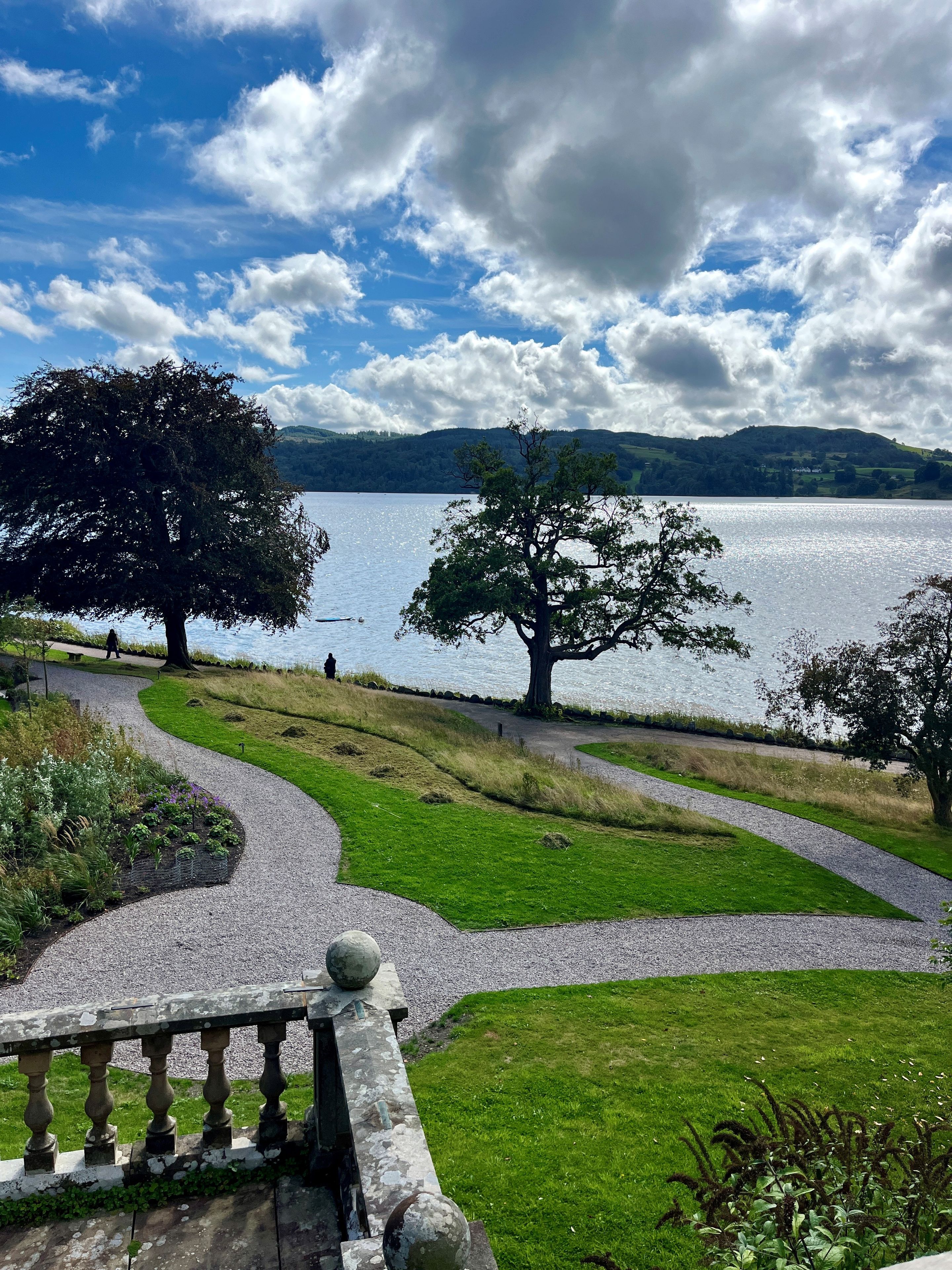
In late summer, we began cutting back our wildflower meadows, which stretch along the garden’s edge beside the lake. We cut most areas twice a year, with this later cut allowing late-flowering plants, such as common knapweed (Centaurea nigra), to finish flowering and drop seed for next year. The cut material is removed to keep soil fertility low and reduce competition from grasses. Over the past three years, we have gradually reduced areas of grass in these lower-intensity areas, sown wildflower seed, and planted wildflower plug plants. We also leave some sections of meadow uncut over winter, providing food and shelter for insects and other wildlife.
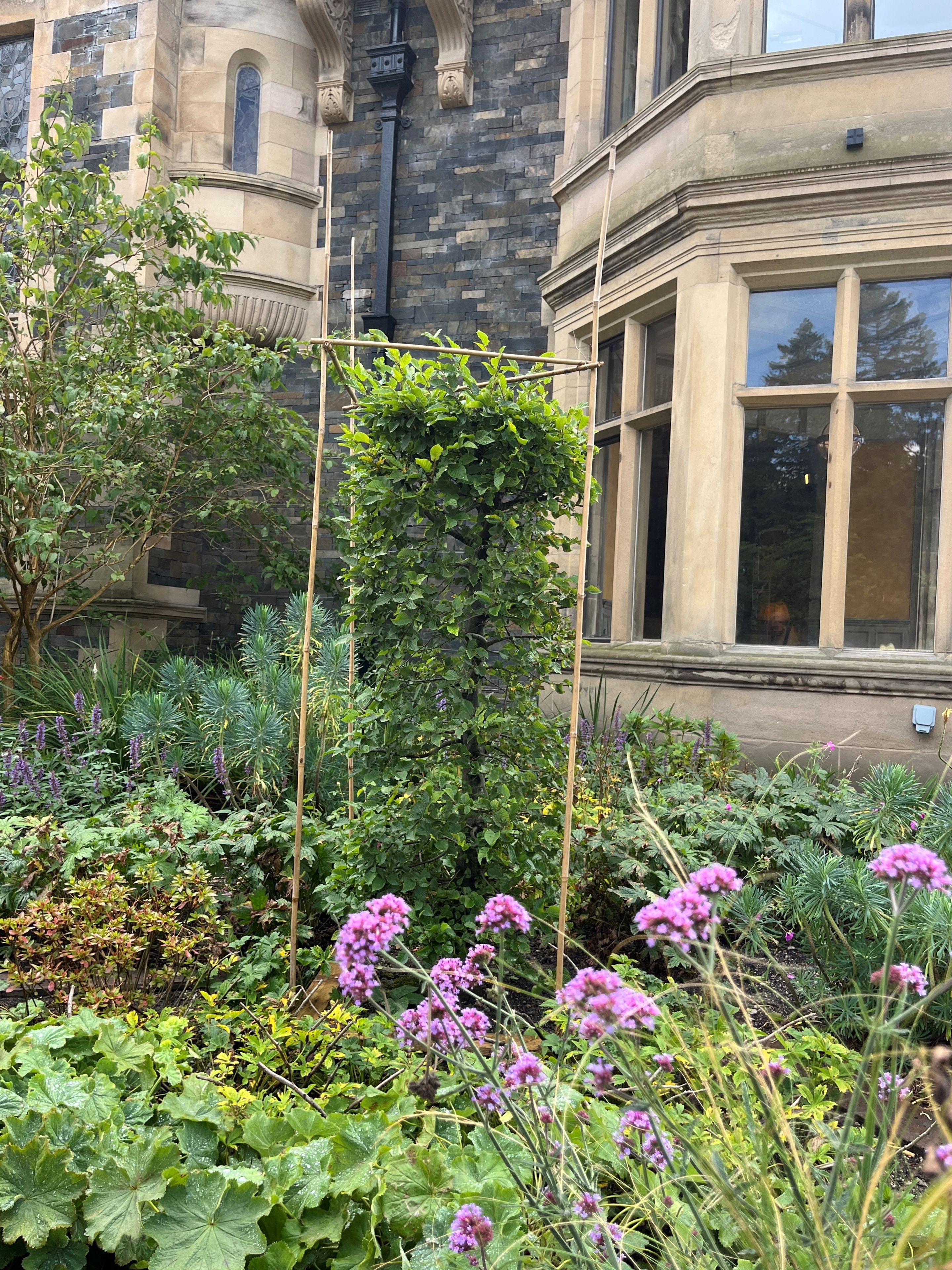
Last autumn, we replaced three yew (Taxus baccata) pyramids in front of the bar that had struggled to establish in our heavy soil with columns of hornbeam (Carpinus betulus). Hornbeam is better suited to the heavier, moisture-retentive soil and the exposed position. We gave the columns their first prune this summer, cutting individual stems by hand rather than using hedge trimmers. This gives a cleaner finish and avoids cutting through the leaves, which can leave brown edges.
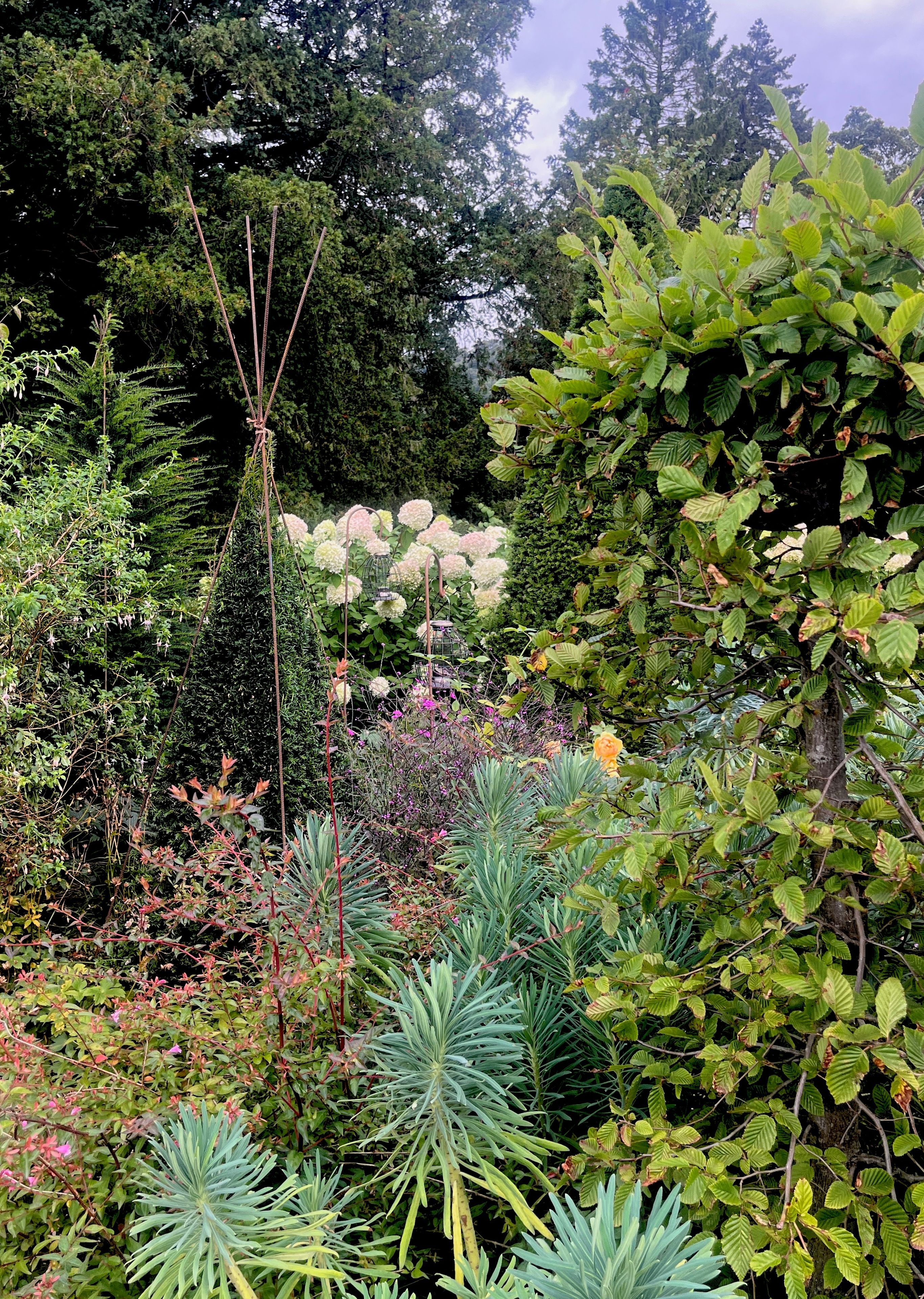
We also began our annual light prune of the yew (Taxus baccata) pyramids, trimming back this year’s growth to maintain their shape. Our gardener Charlotte designed and made the metal frames, which resemble teepees and act as guides for the hedge trimmer. This enables us to achieve a consistent shape and crisp, clean edges.
– Claire
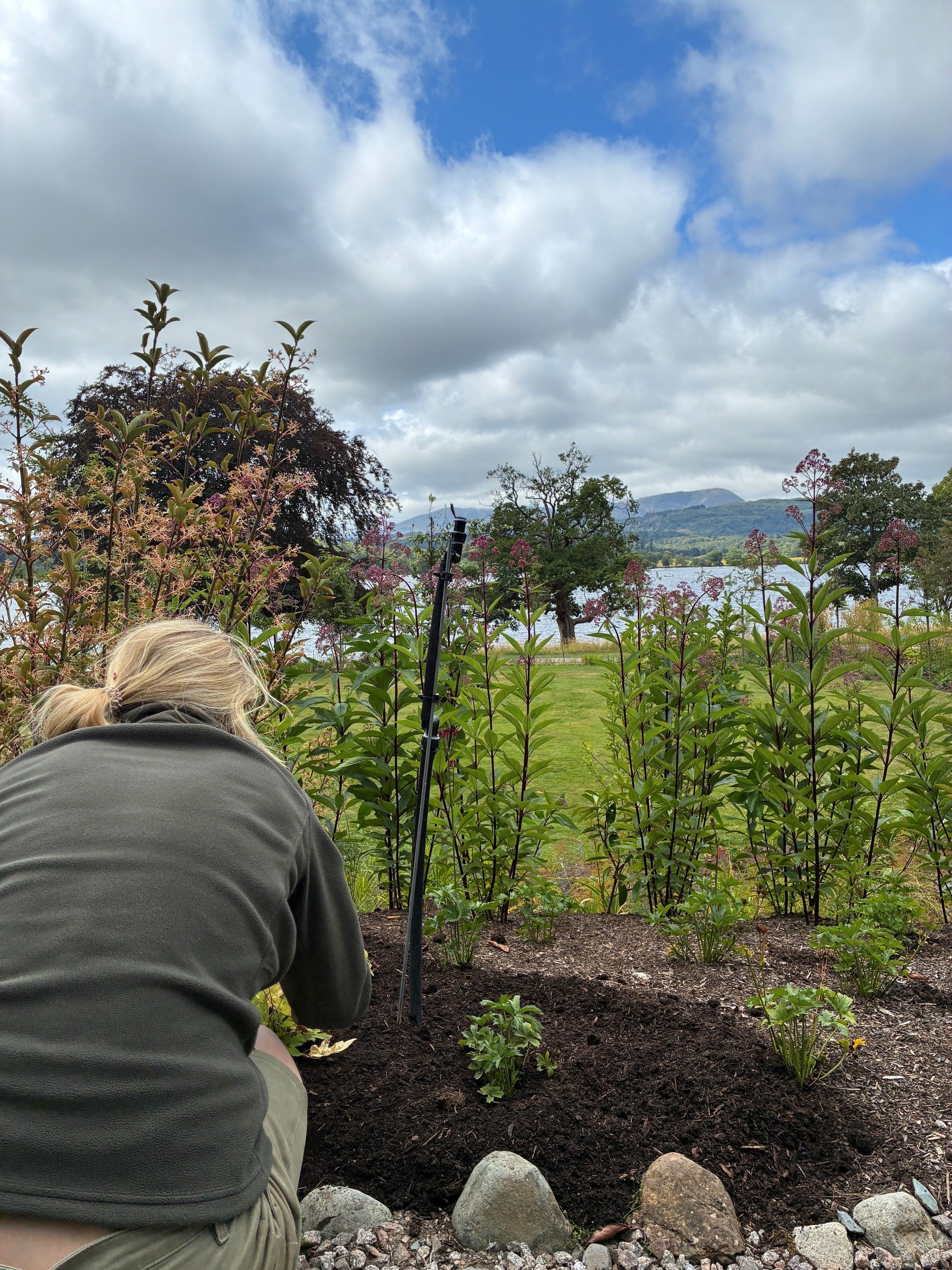

For the last couple of months, the garden team could mostly be found watering, thanks to one of the warmest and driest summers we can remember. The dry conditions were particularly challenging for our newly planted phase 2 areas, which include more than 3,000 trees, shrubs and perennials. Thankfully, our rainwater-fed sprinkler system, installed over winter, performed brilliantly, and the vast majority of the new planting has survived.
Areas beyond the reach of the sprinklers were watered using our bowser and hoses, with hydrangeas and cornus proving most susceptible to the drought. In between watering, we spread the final section of mulch, officially completing the second phase of the garden redevelopment.
One small area had been left bare after we noticed solitary bees nesting in the soil. Many species nest underground, so we avoided disturbing the site while they were active and only completed the mulching once activity had ceased. We have since learnt that their young can remain underground long after the adults disappear, something we will take into account in future management.
Completing phase 2 is a significant milestone for the team and a moment worth celebrating. It has been fantastic to watch the planting establish over recent months, with careful soil preparation, irrigation, watering and mulching all playing an important role. Guests can now enjoy seeing the garden continue to grow and develop in the years ahead. Well done to the team!
– Claire
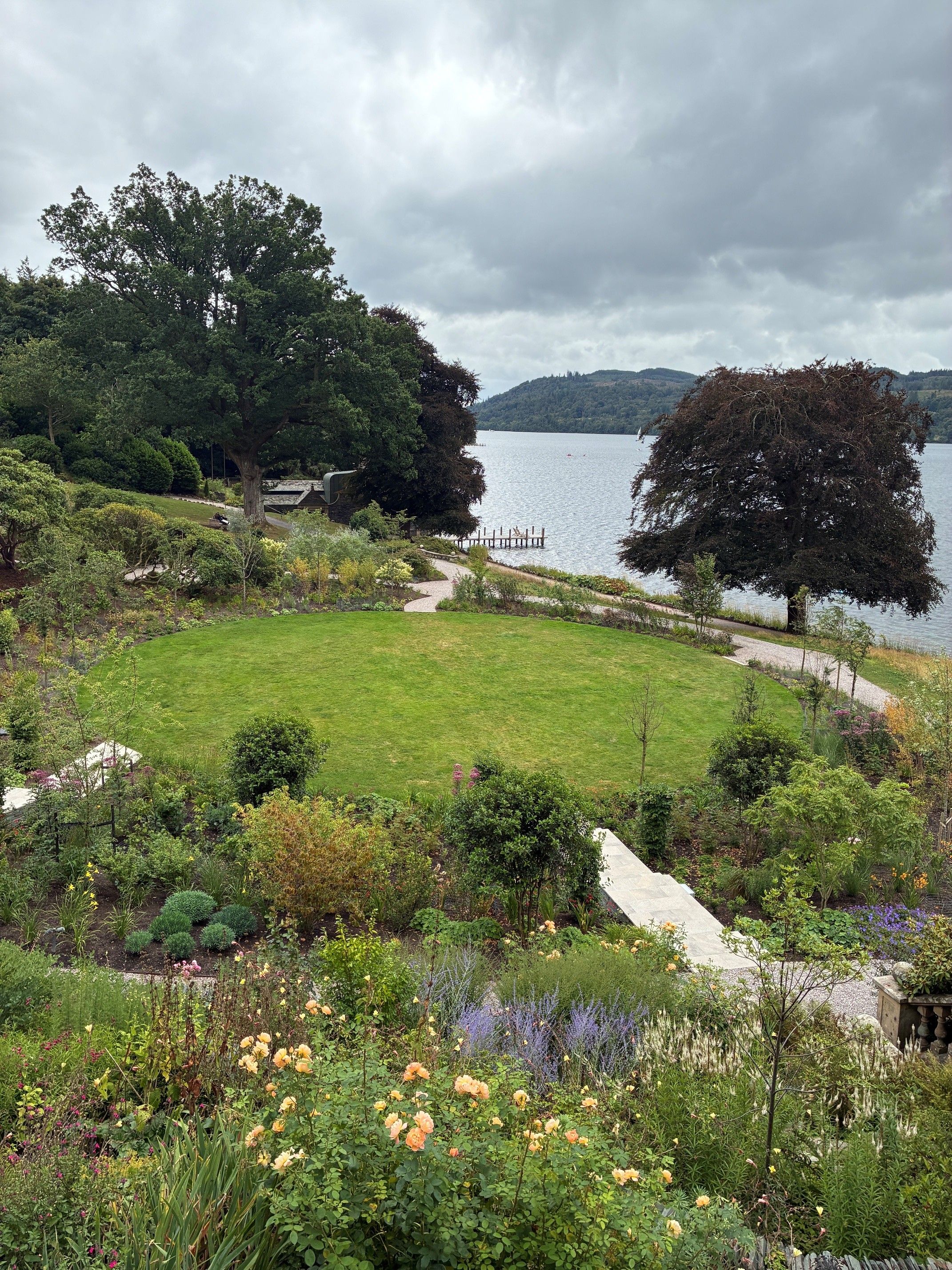
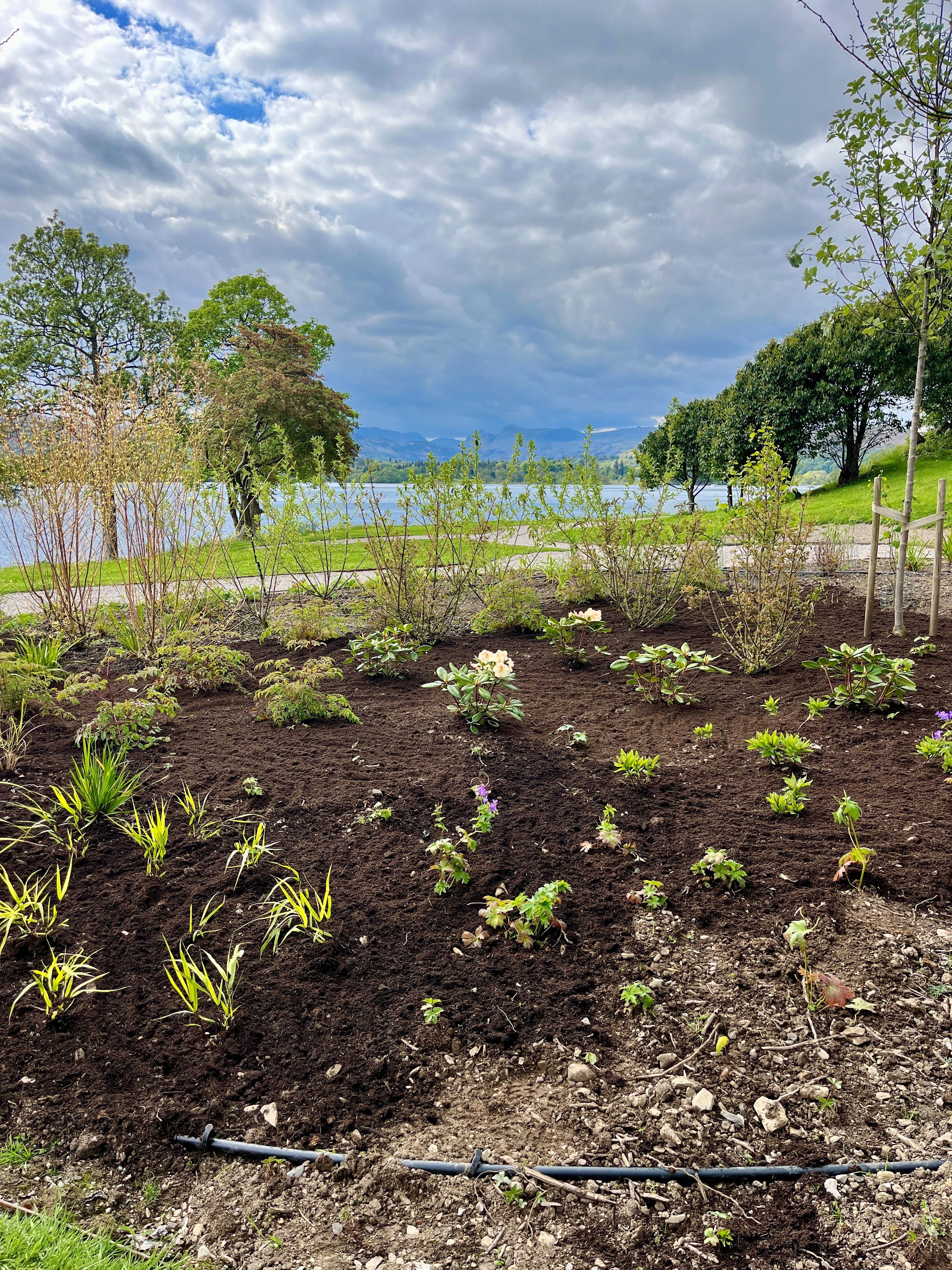
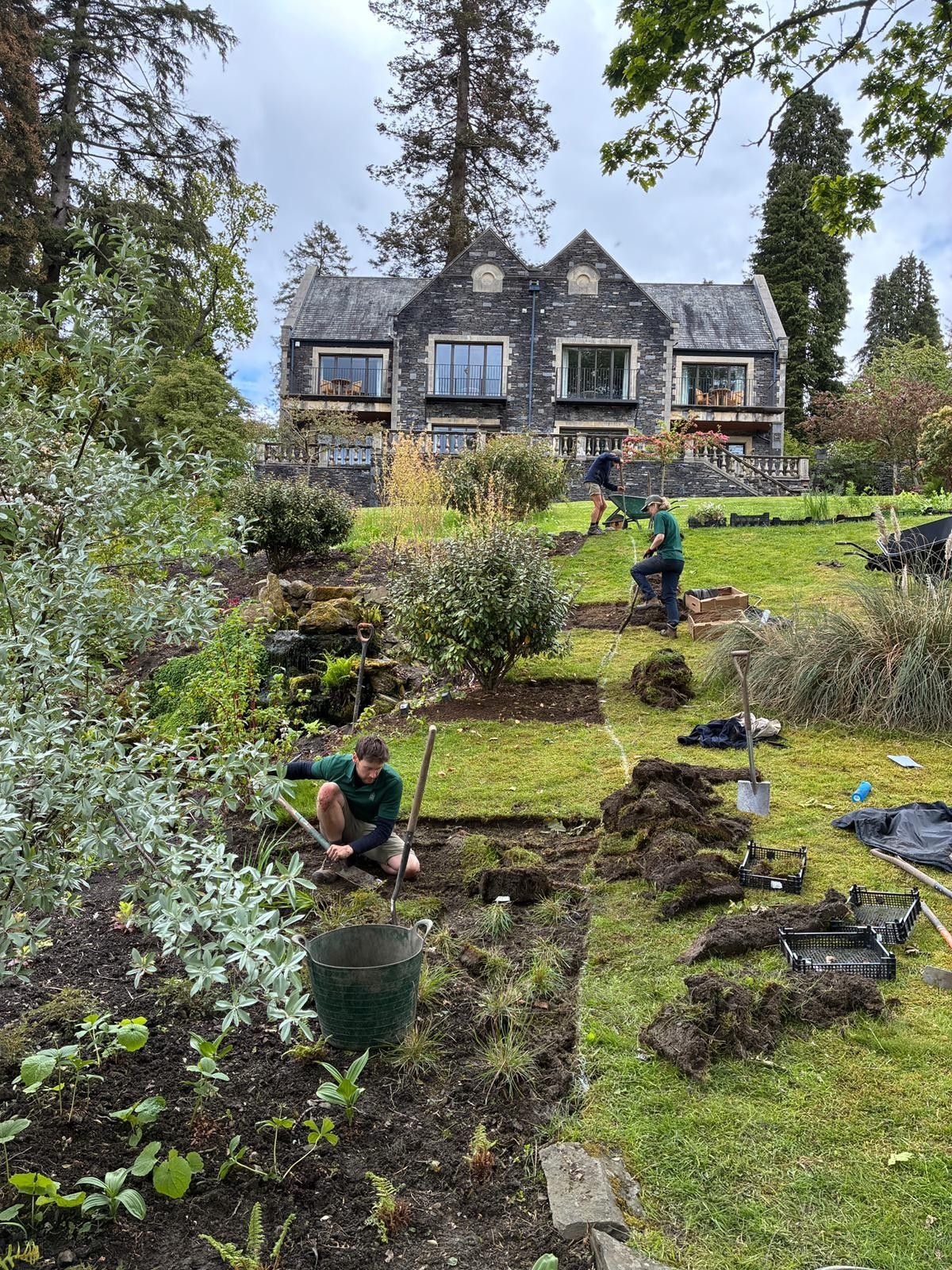
Planting kept us busy throughout May, supported by the Lakeland Gardens team, who have worked with us on previous redesigns. We planted high, mixing compost and grit to improve drainage in the clay soil and allow for a deep mulch layer. The rest of the month was spent weeding and mulching with composted bark fines to suppress weeds, retain moisture and improve soil structure. This final step gives the new planting the strongest start, helping the borders establish well and develop into the vibrant displays envisioned in the redesign.
Several plants were still to be added later in May, including Primulas, Disporum and ferns for colour along the stream edge, plus a range of perennials for the adjacent lawn. As planned in the original design, planting on the south side of the stream was extended to balance the opposite bank and create a stronger sense of enclosure around the water. We shaped a natural, sweeping edge using large stones to define the boundary before incorporating grit and compost and planting the remaining stock. The completed planting softens the transition between lawn and stream, creating a richer, more natural setting for guests exploring this area.
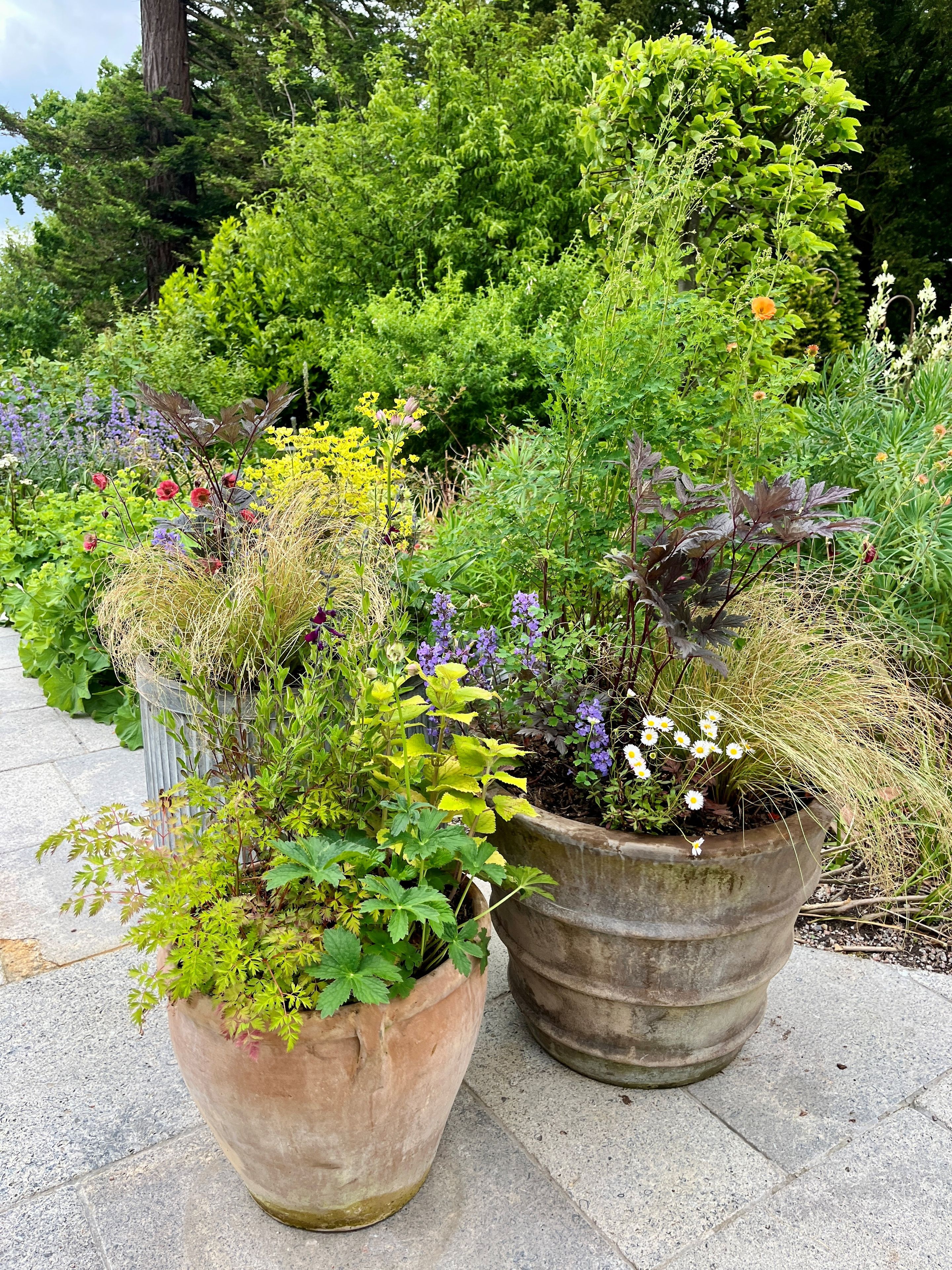
We also refreshed the potted displays at the terrace entrance once the spring bulbs had finished. They were replaced with a mix of perennials, airy grasses and trailing foliage from Abi and Tom’s Garden Plants, creating a soft, natural display in keeping with the surrounding borders. Standout plants include Actaea simplex ‘Brunette’, Euphorbia ‘Ascot Rainbow’, and the feathery Aruncus aethusifolius.
– Claire
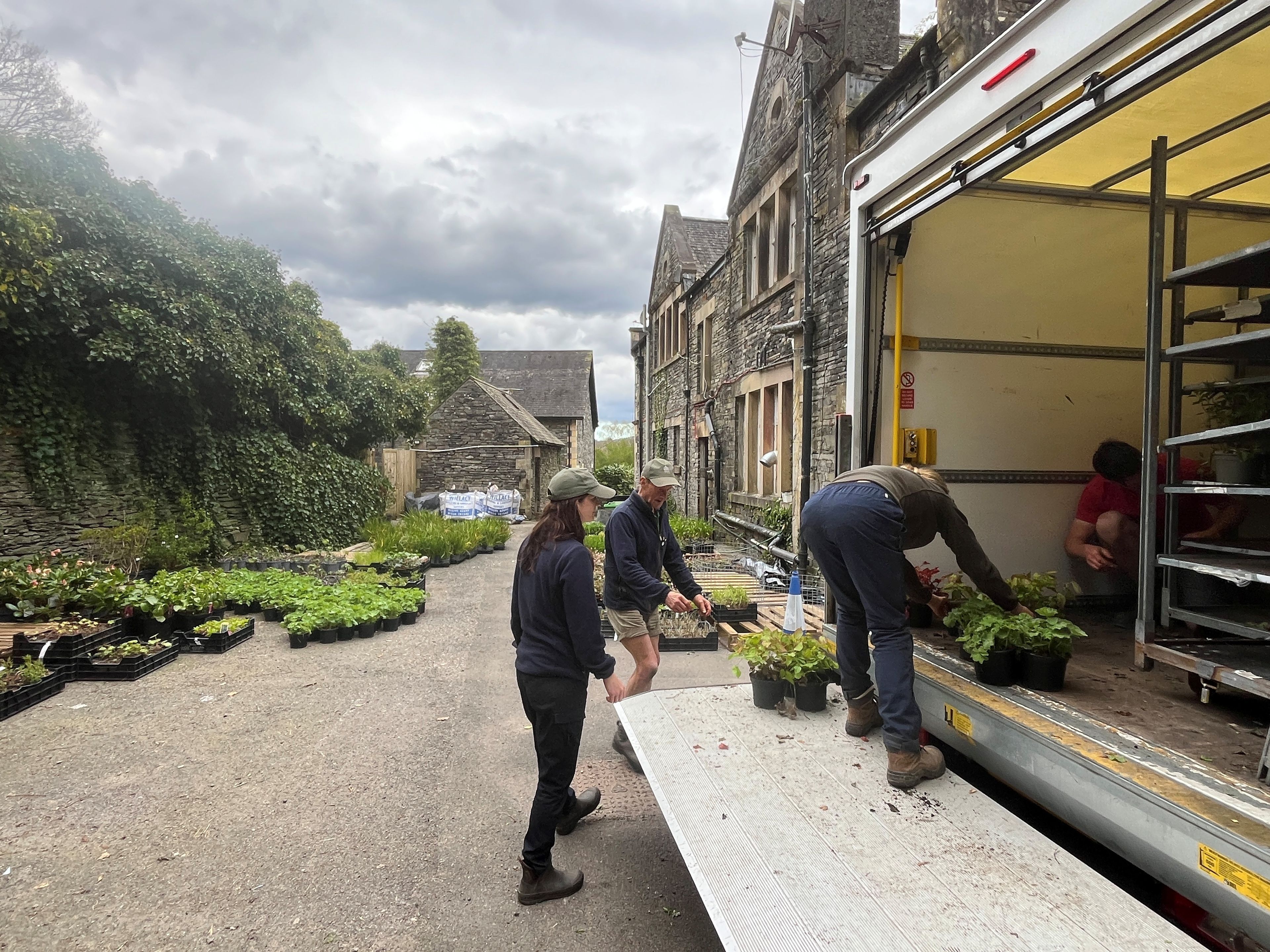
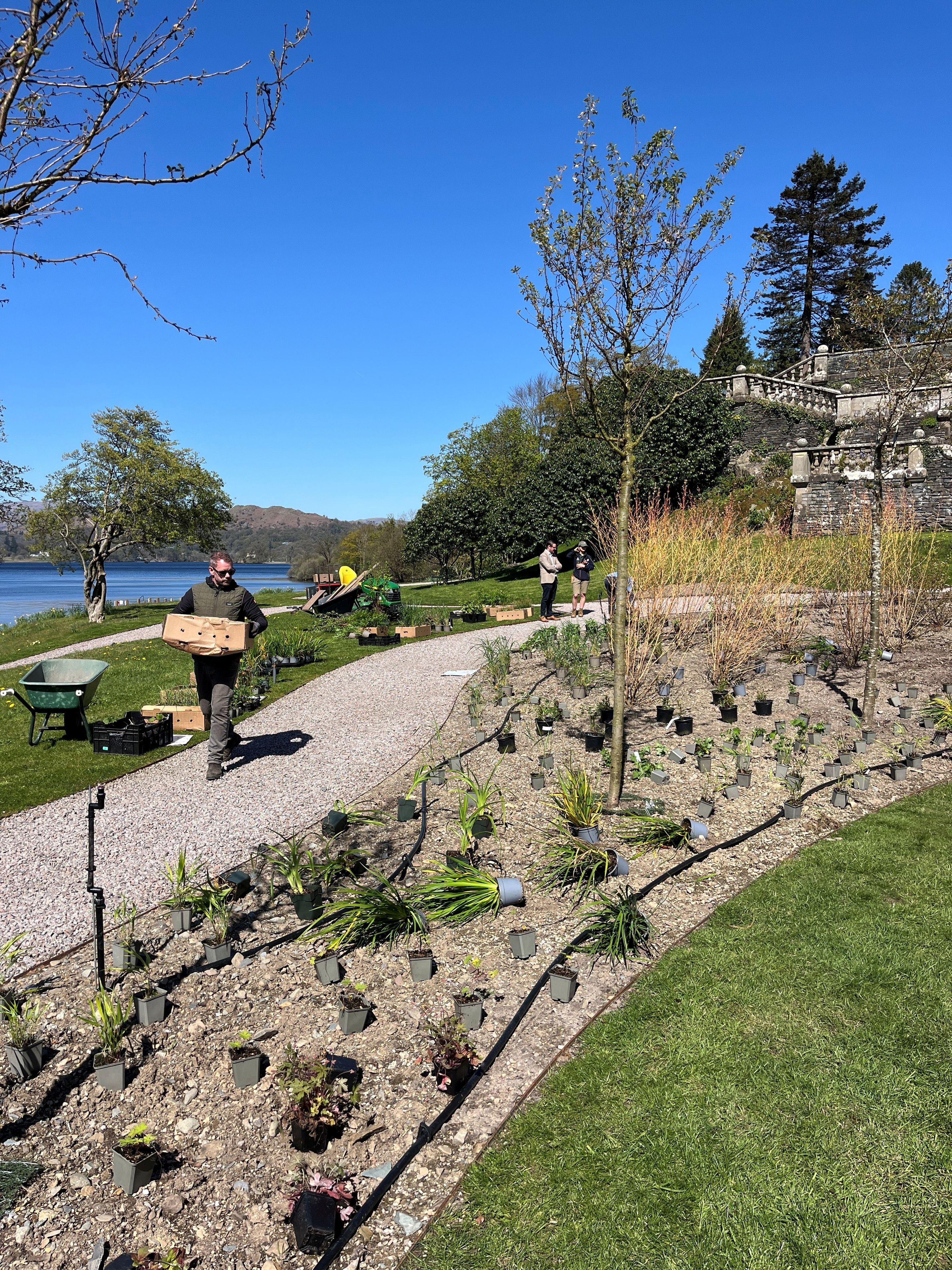
20th April was a big day for the garden team; we received a delivery of approximately 3,600 plants for the second phase of the garden redesign, including perennials, grasses, ferns, trees and shrubs that could not be sourced last autumn. These were supplied by a host of successful nurseries, including Arvensis Perennials, Abi and Tom’s Garden Plants, Beth Chatto Gardens, and Kevock Garden Plants.
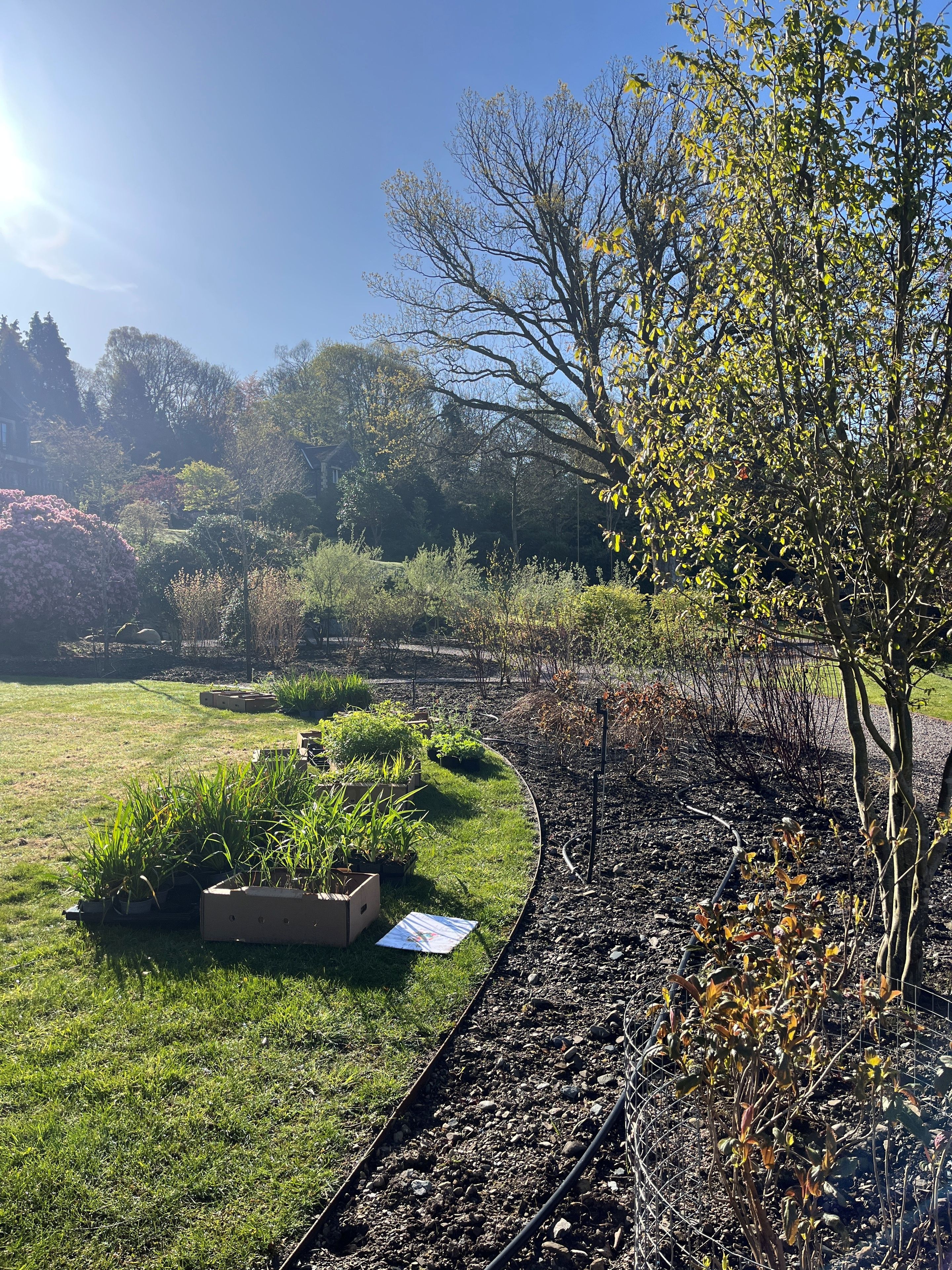
We began by organising each plant according to the planting plan zones. Each border experiences different conditions – the streamside is shaded, whereas areas around the lawn are exposed to full sun, with planting suited to reflect this. With thousands of pots to sort, it was a challenging yet exciting process, giving us our first real glimpse of the range of plants that will make up the next part of the garden.
Two days later, we were joined by two of the designers, Annie and Martin. Patrick was putting the finishing touches to his Chelsea Flower Show garden, which went on to win a Gold Medal. Massive congratulations, Patrick! Together, we began the mammoth task of laying out the plants in their final positions.
We were blessed with fantastic weather throughout, although this brought its own challenges. With thousands of plants waiting to go into the ground, keeping the pots watered while finding time to plant them all proved quite a balancing act.
– Claire
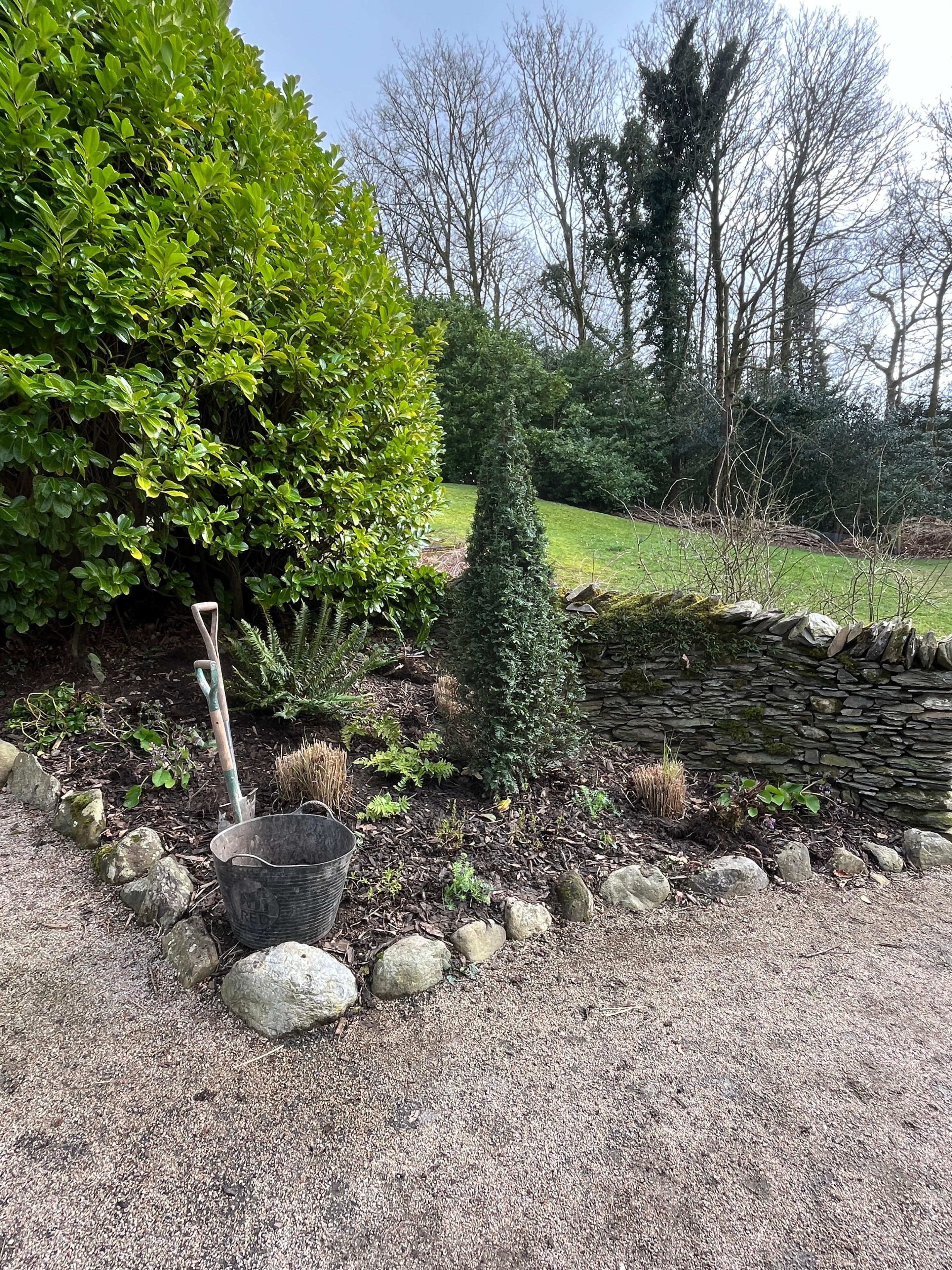
With the growing season approaching, we turned our attention this month, with Alex taking the lead, to re-siting several plants following earlier clearance work. This included one of the yew (Taxus baccata) pyramids, various Polystichum species removed from around the streamside, and a mature Miscanthus sinensis. These plants have been repositioned into borders of the garden that are still to be refined, helping to bring greater balance and structure whilst strengthening the overall cohesion of the planting. By reusing plants already on site, this also provides a more sustainable approach as the garden continues to evolve.
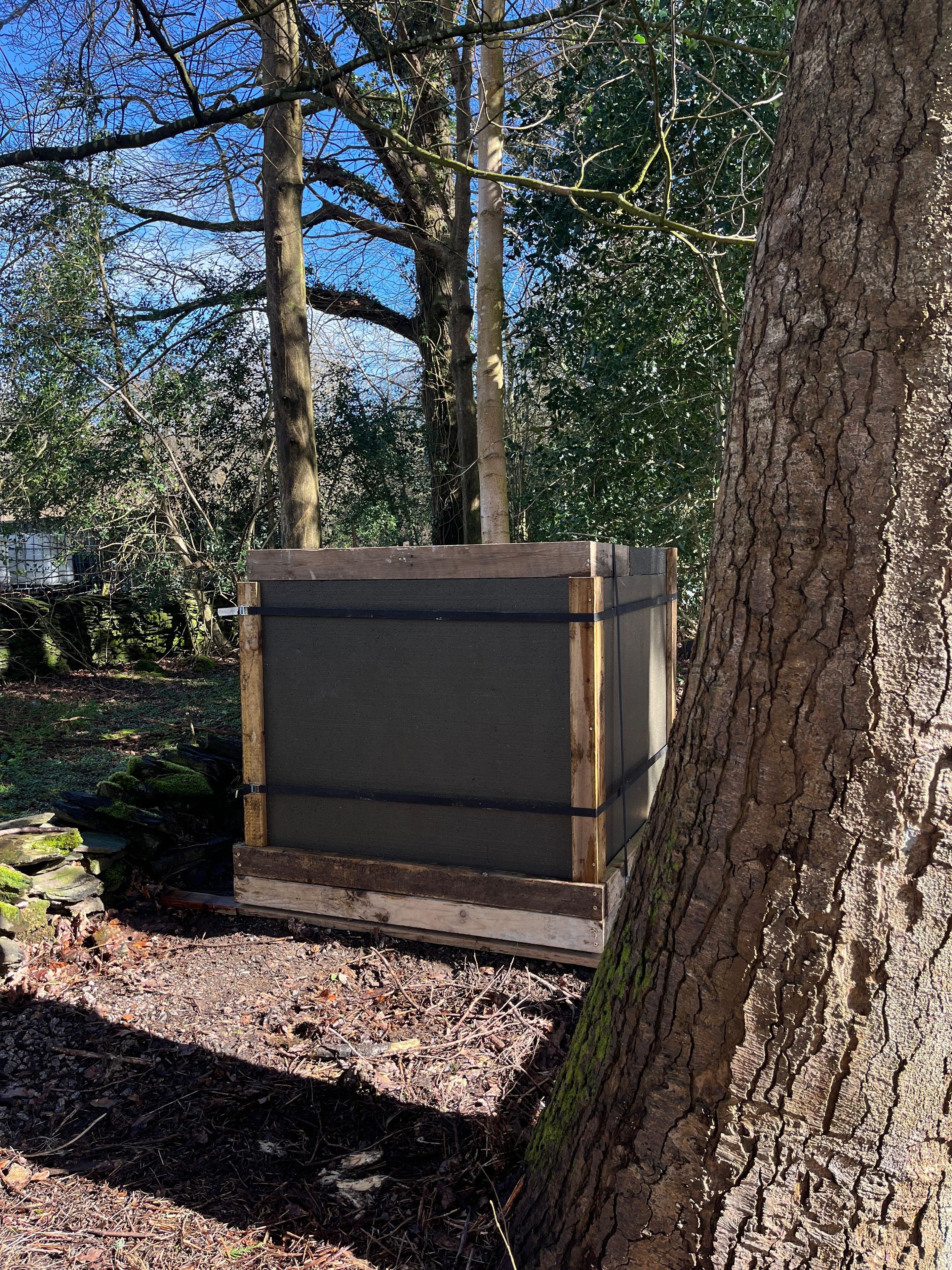
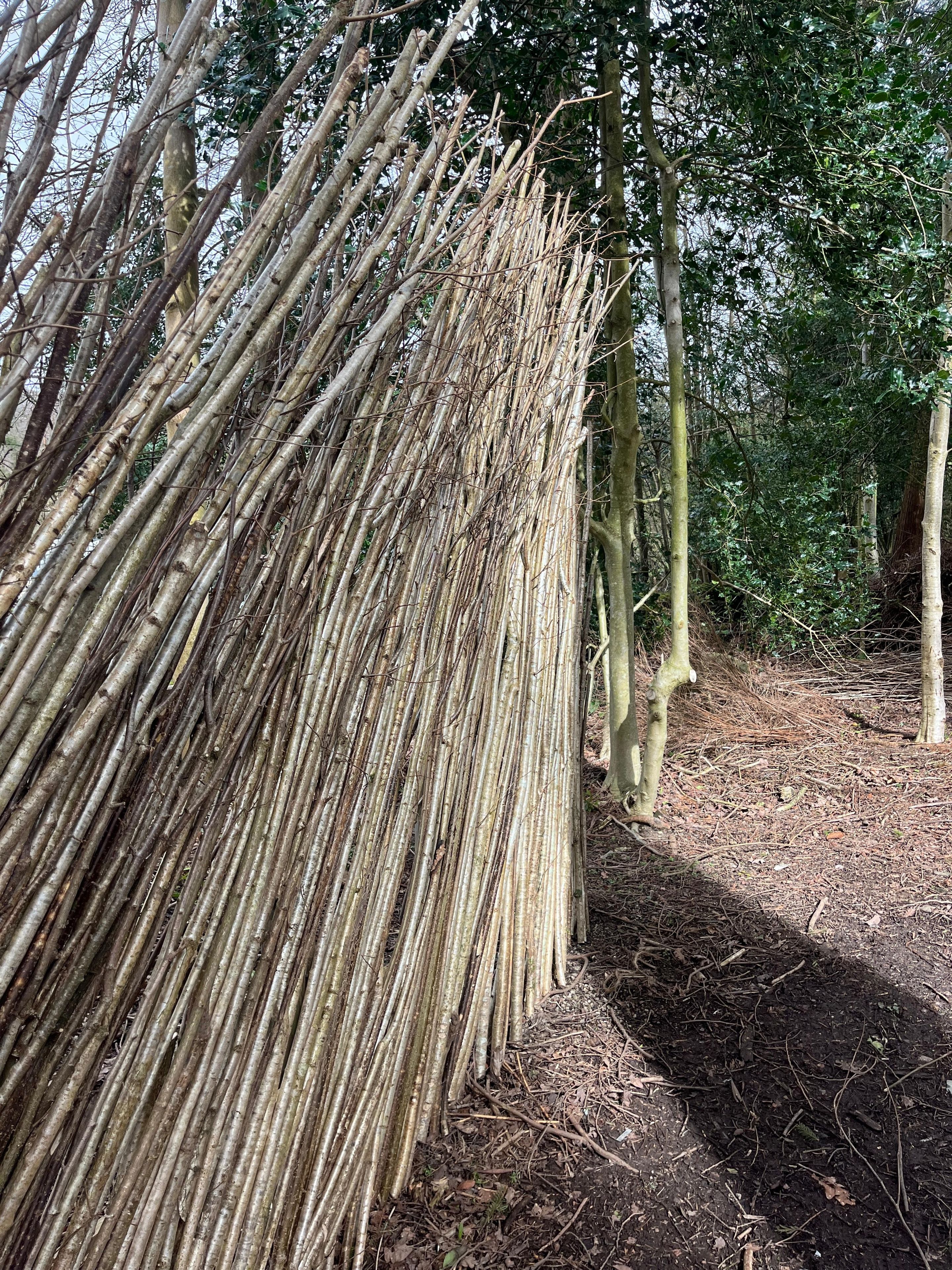
Another project this month was the introduction of a hot composter, with Charlotte leading the build following guidance from Charles Dowding. This addition allows us to process more challenging material, including perennial and seed-bearing weeds, within the garden. The composter has been screened using locally sourced coppiced hazel, helping it to sit more naturally in its surroundings. This approach makes better use of organic material, allowing us to return more valuable nutrients to the soil.
– Claire
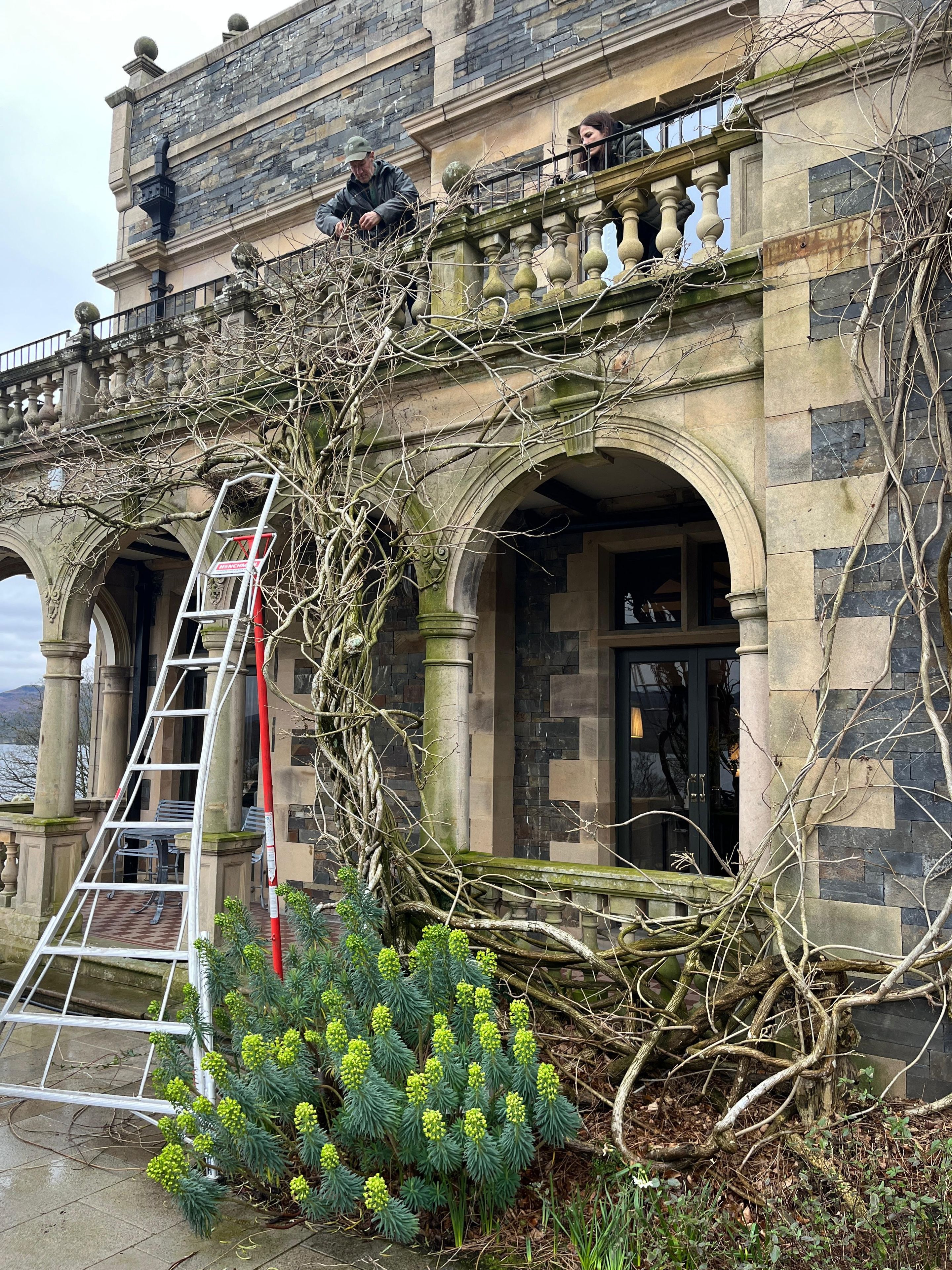
Late winter marks the ideal period to prune many shrubs and climbers whilst they are still dormant, helping to promote healthy growth and maximise flowering potential in the season ahead. Two notable plants we worked on this month were our Wisteria sinensis and our English shrub roses. At this time of year, we focus on removing dead, damaged, diseased, or crossing growth and shaping plants to allow light and air into the centre. Our roses benefit from a harder prune to encourage strong new shoots, whereas our wisteria is pruned more selectively, maintaining its framework by shortening side shoots to promote flowering bud development. These winter tasks play a key role in the abundance of flowers, scent, and colour that our guests enjoy later in the year.
Alongside winter pruning, the team has also been developing our Phase 2 irrigation system to support new plantings more sustainably as we move into the growing season. By drawing on naturally collected water, rather than relying on a mains supply, we can reduce our environmental impact whilst ensuring plants establish successfully. We have opted for an above-ground sprinkler system to water efficiently without disturbing or compacting the soil. Water is supplied from a naturally collected well, with a pump feeding key areas of the garden. The system can be timed to run outside of peak guest periods, maintaining both plant health and the enjoyment of the garden.
– Claire
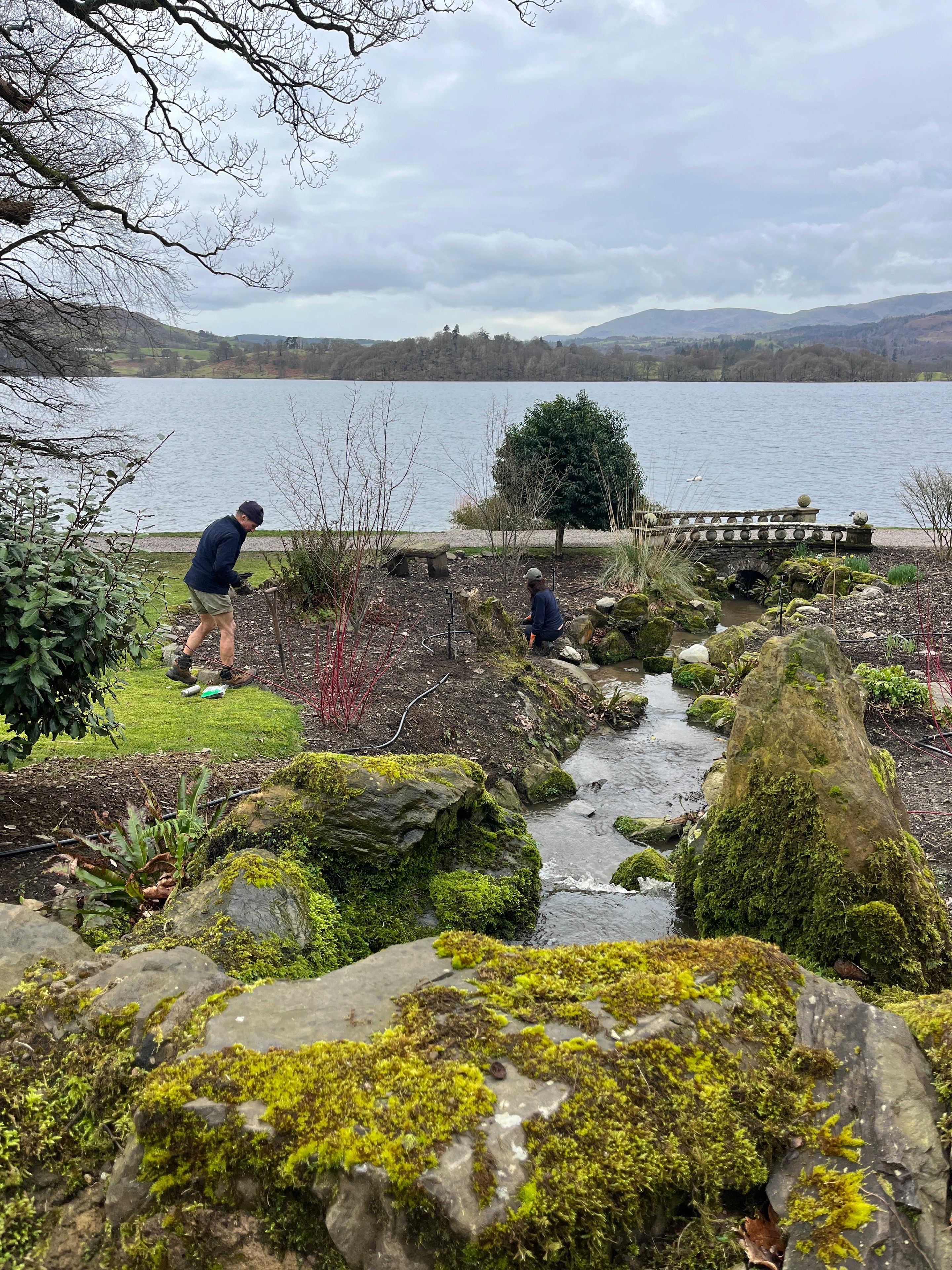
January in the garden is often a quieter month. Much of our time has been spent behind the scenes, cleaning and re-treating the teak furniture that will return to the terraces in early spring.
But while the borders may appear still, the garden itself has been full of life.
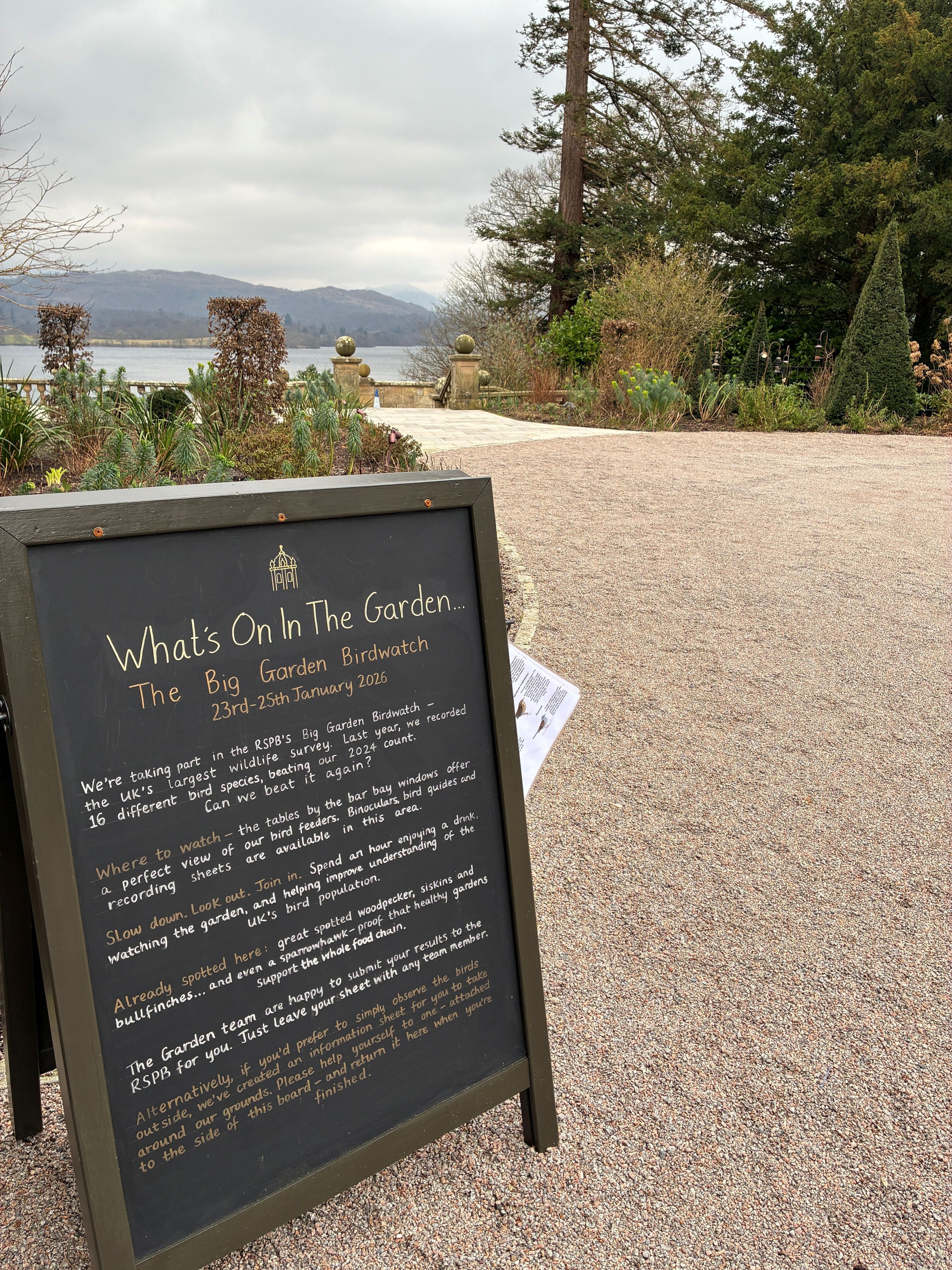
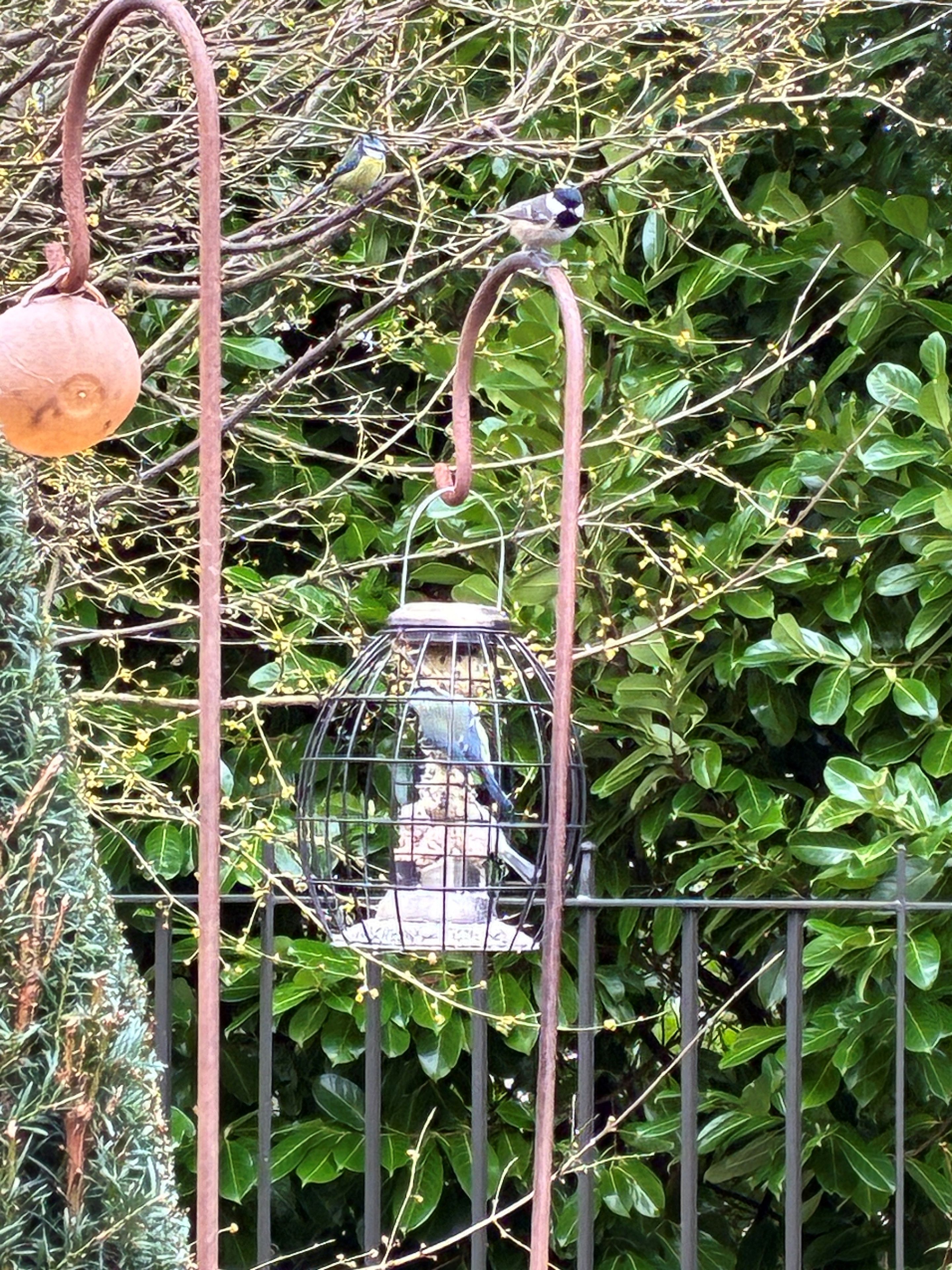
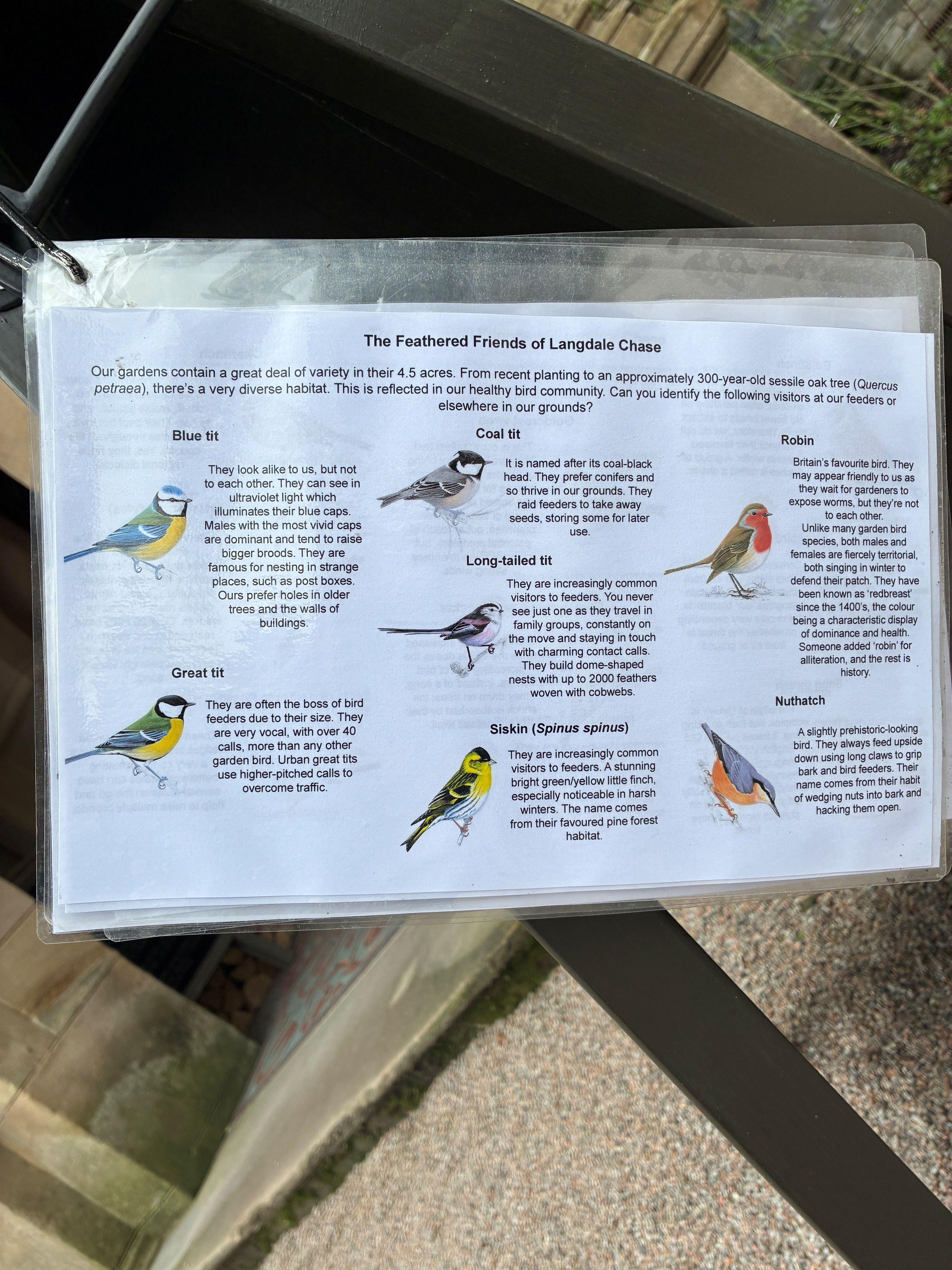
This month, our gardener Trevor organised Langdale Chase’s participation in the RSPB Big Garden Birdwatch, turning a national wildlife survey into something guests could enjoy during their stay. An interpretation board was installed in the garden to invite participation, extra feeders were added to increase activity, and the team created an illustrated leaflet introducing some of the birds commonly seen around the grounds.
The mix of mature trees, evergreen structure and open planting provides valuable habitat at this time of year, and sightings included siskins and even a passing sparrowhawk – a reminder that healthy gardens support whole ecosystems.
As we move towards spring, the furniture will return outdoors, and the garden will begin to shift again. But January has been a reminder that there is always something to see, even in the quietest months.
– Claire